 how-to
How to Help Elementary Child With Homework
Table of Contents
- How to Help Elementary Child With Homework: A Parent's Framework
- Building a Homework Routine for Elementary Students
- Creating a Distraction-Free Study Space
- How to Help a Child Struggling With Homework
- How Much Should Parents Help With Homework
- When Your Child Refuses to Do Homework
- Motivation, Encouragement, and Praise
- Addressing Learning Differences and Digital Distractions
- Frequently Asked Questions
Last Updated: October 5, 2026
How to Help Elementary Child With Homework: A Parent's Framework
Homework stress is real.
How to help elementary child with homework means finding the right balance: your child learns rather than just gets the right answer, independence grows instead of frustration, and homework time feels manageable, not like a second job.
At K5 Homework Aid For Parents, we understand this tension.
This guide covers the framework that works: a routine that sticks, a distraction-minimizing study space, and responses when homework becomes a power struggle, all while helping without taking over.
Building a Homework Routine for Elementary Students
A consistent homework routine removes daily negotiations. Instead of "Can we do homework now?" every afternoon, homework becomes part of the day, like brushing teeth.
Choosing a consistent time and place
Pick the same time and place every school day. Consistency trains your child's brain to shift into homework mode automatically.
The best time depends on your family. Some children focus right after school; others need a snack and 30 minutes to decompress.
The place matters equally. A dedicated desk or table works best, quiet, away from screens and siblings.
Setting realistic daily time limits
Most elementary homework should take 10 to 20 minutes per grade level: a second grader 20 to 30 minutes total, a fifth grader 45 to 60.
Set a timer: "We'll work for 30 minutes, then take a break." Time limits keep homework from consuming the evening and build urgency, a defined end helps children focus.
If homework regularly takes twice as long as expected, the workload is too heavy, your child is struggling, or both.
Creating a Distraction-Free Study Space
A good study space does half the work for you, removing reasons to get up, wander, or lose focus.

Here's what works:
- One desk or table, dedicated to homework only
- Good lighting, natural light is best; a desk lamp if natural light isn't available
- Supplies within reach, pencils, erasers, paper, ruler (no hunting for supplies mid-assignment)
The space doesn't need to be fancy, it needs to be boring.
How to Help a Child Struggling With Homework
The hardest part of helping is knowing when to help and when to let your child struggle. Struggle builds problem-solving skills. But frustration without progress builds resentment.
Getting started without doing the work for them
Many parents jump in too fast, providing the answer the moment their child hesitates. This teaches that confusion means "ask Mom or Dad," not "think harder."
Instead, start with questions:
- "What do you think the question is asking?"
- "Have you seen a problem like this before?"
- "What did your teacher show you about this?"
These questions guide your child toward the answer without giving it, and reveal where the confusion actually is, a misread problem, or not knowing where to start.
Breaking tasks into manageable steps
A full worksheet looks overwhelming. Break it into chunks.
Instead of "Do your homework," try:
- "Let's do the first three problems together, then you'll do the next three on your own"
- "Read the first question, then tell me what it's asking"
- "Do one page, then we'll take a five-minute break"
Smaller tasks feel achievable. Your child sees progress. Momentum builds. By the third or fourth problem, they often find their rhythm and work more independently.
Using questions to guide understanding
The goal is understanding, not just answers. If your child copies an answer without grasping the concept, the homework fails its purpose.
When your child gets stuck:
- Ask what they've already tried
- Ask what they know about the topic
- Ask if they remember a similar problem
- Only then show them how, and make them do the work
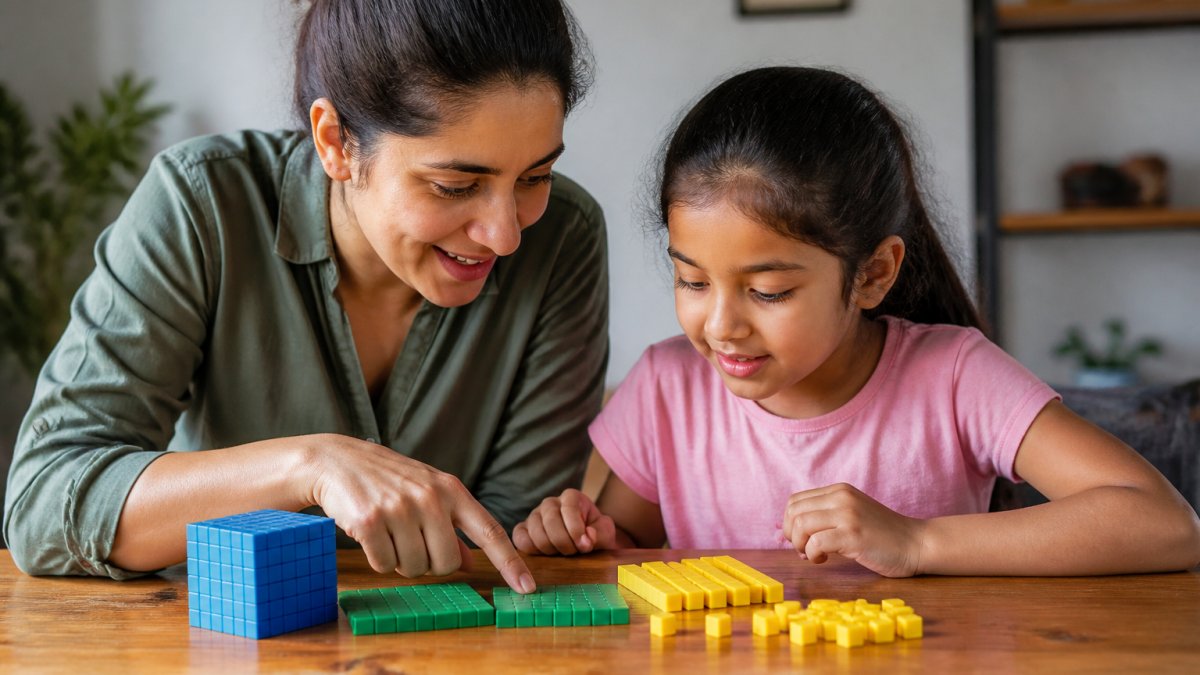
For math, this might sound like: "You're adding these two numbers.
For reading or writing, ask your child to read the passage aloud. Often they'll catch their own mistake. If not, ask: "What does that word mean?" or "Why do you think the character did that?"
How Much Should Parents Help With Homework
This is the core tension every parent faces. Too much help and your child becomes dependent. Too little and they get frustrated and give up.
The balance between independence and support
The rule of thumb: your child does 80% of the work. You guide, clarify, and encourage, you don't do the assignment.
This looks different by grade level.
As your child gets older, gradually remove your involvement, "scaffolding," or building support structures you slowly take away as independence grows.
By fifth grade, your role is mostly monitoring: check that homework got done and glance at it to see if it looks reasonable, but don't sit beside them explaining every problem.
Monitoring without taking over
Check in, but don't hover. Here's the difference:
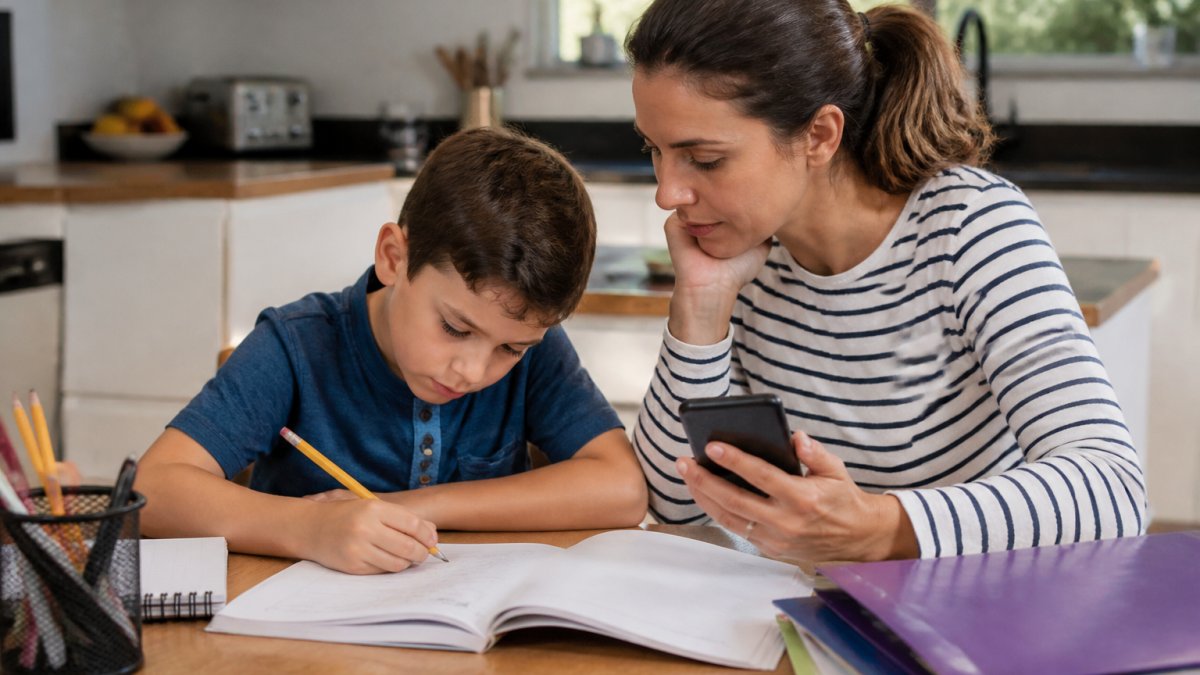
Hovering: Sitting next to your child the entire time, correcting mistakes as they happen, asking if every answer is right.
Monitoring lets your child work independently while you stay aware of progress and struggles, and teaches responsibility, knowing you'll review their work makes them check it first.
If you notice consistent mistakes, don't correct them all. Point out one or two and ask your child to find the others. This builds self-correction skills.
When Your Child Refuses to Do Homework
Some nights, homework becomes a standoff. Your child refuses. You insist. Everyone gets frustrated.
Understanding the root cause
Refusal usually signals something specific. Your child isn't being stubborn for no reason.
Common causes:
- The assignment is too hard, frustration builds quickly when a child doesn't understand
- Your child is tired, after school, some kids are genuinely depleted
- There's conflict between you, if homework time always becomes a battle, your child may resist out of habit
Before you react, pause and ask: "What's making homework hard right now?" Listen, the issue is often fixable once you know what it is.
Step-by-step response to homework meltdowns
When your child melts down, here's how to respond:
Step 1: Pause. Don't engage in the moment. Take a breath. A meltdown isn't a behavior problem to punish, it's a signal that something is overwhelmed.
Step 2: Validate. Say: "I see you're really frustrated.
Step 3: Separate the emotion from the task. "You're upset, and that's fine.
Step 4: Start small. Don't tackle the whole assignment. Do one problem together. Success builds momentum.
Step 5: Ask for help. If your child is still stuck, say: "This is hard.
Motivation, Encouragement, and Praise
How you respond to your child's homework efforts shapes their attitude toward learning.
Offering encouragement for effort, not just results
Praise matters. But praise the right thing.
Wrong: "You got an A! You're so smart!"
Right: "You worked really hard on this. I saw you try three different ways to solve that problem.
The second teaches that effort and persistence lead to results, struggle is part of learning, not a sign of failure.
Praise effort:
- "You kept trying even when it was hard"
- "You asked a great question"
- "You checked your work twice"
- "You explained your thinking clearly"
These comments teach your child that homework is about the process, not just the grade.
Using rewards appropriately
Rewards can motivate, but they can backfire. A child who does homework only for a reward hasn't learned to value learning itself.
Use rewards strategically:
- Short-term motivation: For a child who refuses homework, a small reward (extra screen time, a favorite snack) can help build the habit. Once homework feels routine, phase the reward out.
- Celebrating milestones: If your child has struggled with homework and finally completes a full week without conflict, that's worth celebrating, not with a toy, but with something they enjoy (a special dinner, a trip to the park).
- Avoid bribes: Don't say "Do your homework and I'll give you a toy." Instead, say "Homework is part of our routine. After homework, we have free time."
The goal: your child eventually does homework because it's expected and learning feels good, not because a reward waits at the end.
Addressing Learning Differences and Digital Distractions
Not every child learns the same way or faces the same challenges. Homework support needs to fit your child.
Supporting children with attention challenges
Some children struggle to focus even in a quiet, distraction-free space. This might be ADHD, a learning difference, or just how their brain works.
Strategies that help:
- Shorter sessions: Instead of 30 minutes straight, do 15 minutes, break, 15 minutes
- Movement breaks: A quick walk around the block or jumping jacks between subjects helps reset focus
- Fidget tools: For some children, a fidget toy or stress ball in hand actually improves focus
- Clear instructions: Write down what needs to be done. Don't just say it. Visual reminders help
If your child consistently struggles to focus despite these strategies, talk to the teacher or pediatrician. Some children benefit from professional support or evaluation.
Managing devices and online homework distractions
Digital homework adds a challenge: your child needs a device for assignments, but that same device offers endless distractions.
Set boundaries:
- One app at a time: Close email, messaging, and game apps before opening the homework app
- Physical distance: Keep the phone in another room if possible. Use only a laptop or tablet for homework
- Website blockers: Tools exist that block social media during set times. Use them
- Visible workspace: Position the screen so you can see what's on it without hovering
If digital distractions persist, print assignments when possible, some teachers will email a PDF if you ask.
K5 Homework Aid For Parents helps by providing clear, age-appropriate explanations that match how teachers actually teach.
Frequently Asked Questions
What should I do if my child refuses to do homework?
First, stay calm and try to understand why they're resisting, whether it's frustration with the material, fatigue, or feeling overwhelmed. Have a quiet conversation about what's making homework difficult. Break the assignment into smaller, manageable tasks and offer specific praise for effort. If refusal becomes a pattern, contact your child's teacher to rule out learning challenges or classroom issues that might be affecting their motivation at home.
How much should parents help with homework?
Your role is to guide, not to do the work. Help your child get started, ask questions that prompt thinking rather than providing answers, and check their understanding. For elementary students, gradually encourage independence as they progress through grades. If homework takes significantly longer than expected or causes constant conflict, involve the teacher. The goal is building self-management skills, not achieving perfect answers.
How can I help my elementary child focus on homework without causing stress?
Establish a consistent homework routine at the same time and place each day. Create a quiet study space free from screens and distractions. Keep sessions short, the 10-minute rule suggests 10 minutes per grade level (20 minutes for second grade, etc.). Take breaks between subjects, offer encouragement for effort, and maintain a calm tone. If your child becomes frustrated, pause and return later rather than pushing through conflict.
What's the best way to help my child understand the 'why' behind homework instead of just getting answers?
Ask guiding questions like 'What do you think comes next?' or 'Can you explain why you chose that answer?' rather than telling them what to do. Help them connect assignments to real-life examples. If they're stuck on a concept, break it down step-by-step and let them work through it. Using tools that explain methods in age-appropriate language, the way their teacher would, also helps children grasp concepts rather than simply copying answers.