 how-to
7 Ways AI Helps Teach Children Foundational Reading
Last Updated: November 2, 2026
Quick Summary
AI for teaching children foundational reading works best as a practice partner that supports structured instruction, not as a replacement for a teacher or parent. It can drill phonics, generate stories at your child's level, and check comprehension, while you track progress and step in when needed.
- The Science of Reading names five core skills: phonemic awareness, phonics, fluency, vocabulary, and comprehension.
- Keep AI phonics sessions short, about five to ten minutes, with instant feedback on errors.
- Read every AI-generated story yourself before your child does, since quality can drift.
- Aim for 90 percent or higher decoding accuracy on a pattern before moving on.
- Measure progress every two to three weeks, not daily, so you see a trend.
Table of Contents
- Start With the Science of Reading, Then Add AI
- AI Phonics Practice for Children: Decoding, Blending and Letter Sounds
- AI-Generated Stories for Children Learning to Read
- AI Reading Comprehension Activities That Go Beyond Word Recognition
- Parent-Guided Reading Practice With AI: A Step-by-Step Lesson Plan
- Matching AI Support to Your Child's Age and Reading Level
- Safeguarding, Privacy and Screen-Time: Using AI Responsibly
- Tracking Progress and Knowing When to Step In
- Frequently Asked Questions
Start With the Science of Reading, Then Add AI
AI for teaching children foundational reading works best as a support tool, not a replacement for structured instruction. The Science of Reading, a large body of research on how children learn to read, points to five core skills: phonemic awareness, phonics, fluency, vocabulary, and comprehension.
A photo-based homework tool can break a reading assignment into plain steps. That support helps, but only when it sits on top of real instruction.
What the evidence says about how children learn to read
Reading is not a natural skill. Children must connect letters to sounds, blend those sounds into words, and build speed over time. The National Reading Panel's findings on reading instruction identified phonemic awareness and phonics as essential building blocks. Most children need explicit, repeated practice to master them.
Where AI fits and where it does not
AI handles practice well. It can generate word lists, read text aloud, and give instant feedback. What it cannot do is replace a teacher's judgment or a parent's encouragement. A common mistake is treating an app as a tutor. Use it as a practice partner instead.
AI Phonics Practice for Children: Decoding, Blending and Letter Sounds
AI phonics practice for children targets the mechanics of reading: letter-sound correspondence, decoding, and blending. A good tool gives your child a sound, asks them to blend it into a word, and corrects errors right away. That loop builds word recognition faster than passive reading.
Here is what to look for:
- Letter-sound drills that repeat until the sound sticks
- Blending tasks like /c/ + /a/ + /t/ into "cat"
- Decoding practice with simple, decodable words
Watch out: some tools drill sight words only. That skips decoding, which struggling readers need most.
AI-Generated Stories for Children Learning to Read
AI-generated stories for children learning to read let you control text complexity on demand. You can ask for a story at your child's exact reading level, using the phonics patterns they are practicing this week. That is a real advantage over fixed books.
Try this approach:
- Pick a phonics pattern, such as short "a" words.
- Ask the AI for a short story using mostly those words.
- Read it together, then ask your child to find every word with that sound.
- Reread the same story the next day for fluency.
The catch is quality. AI stories can drift in tone or difficulty. Read each one before your child does.
AI Reading Comprehension Activities That Go Beyond Word Recognition
AI reading comprehension activities push past decoding into meaning. Word recognition gets words off the page; comprehension is what makes reading useful. AI can generate questions, summarize passages, and check whether your child understood the point.
For deeper guidance, see our guide to using AI for K5 reading comprehension support.
Useful activity types include:
- Retell prompts: "Tell me what happened in your own words."
- Why questions: "Why did the character do that?"
- Vocabulary checks: "What does this word mean here?"
Skip tools that only quiz definitions. Real comprehension work asks your child to connect ideas.
Parent-Guided Reading Practice With AI: A Step-by-Step Lesson Plan
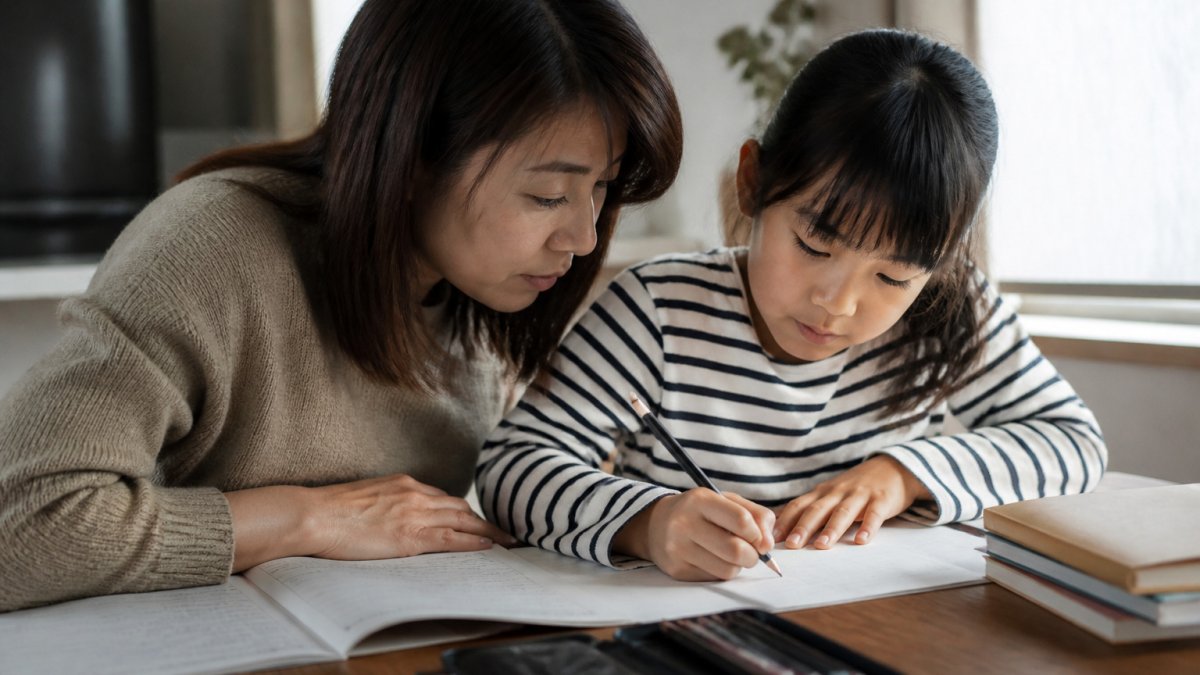
Parent-guided reading practice with AI follows a simple rhythm: warm up, read aloud, then check understanding. Total time is about 15 minutes. You need a tablet or phone, a short passage at your child's level, and a quiet spot.

Step 1: Warm up with phonemic awareness
Start with two minutes of sound play. Say a word, and have your child break it into sounds. Then blend sounds back into words. This primes the brain for decoding.
Step 2: Read aloud, listen back, and repeat
Have your child read a short passage aloud. Use text-to-speech to play it back, then read it again together. Repeated reading builds fluency and confidence. For a fuller walkthrough of listening tools, read our guide to text-to-speech for homework.
Step 3: Check understanding and adjust the text
Ask two or three comprehension questions. If your child stumbles, lower the text complexity and try again. If it feels easy, raise the level slightly.
Matching AI Support to Your Child's Age and Reading Level
Age and skill level should drive every choice, but grade band alone is a blunt instrument. Two second graders can sit at very different points on the decoding continuum. The more useful question is: which foundational skill is my child practicing right now, and does the AI tool target that skill explicitly?
Use the grade band as a starting point, then match the tool to the specific skill stage below.
Skill-stage guide for early readers
| Skill stage | What the child is learning | What AI should do | What to avoid | Typical session |
|---|---|---|---|---|
| Letter-sound knowledge (pre-K to early K) | Connecting printed letters to spoken sounds | Say a sound and show the letter; ask the child to pick the matching letter from a small set | Tools that jump to whole words before letter sounds are solid | 5 minutes, 2-3 times per day |
| Blending and segmenting (K to early 1) | Pushing sounds together into words and pulling words apart | Model /c/ /a/ /t/ → cat, then ask the child to blend; give immediate corrective feedback | Passive story apps with no sound-level interaction | 5-10 minutes |
| Decoding with decodable text (Grade 1) | Applying letter-sound knowledge to unfamiliar words | Generate short passages using only the phonics patterns already taught; highlight target patterns | Leveled books that rely on guessing from pictures or context | 10 minutes |
| Early fluency (late Grade 1 to Grade 2) | Reading connected text accurately and at a steady pace | Provide repeated-reading playback, timed rereads, and word-correct-per-minute feedback | Tools that only quiz comprehension before fluency is established | 10-15 minutes |
| Vocabulary and comprehension (Grade 3 and up) | Building meaning from longer text | Generate retell prompts, why/ how questions, and vocabulary-in-context checks | Definition-only quizzes that skip inference | 15-20 minutes |
Adjusting within a stage, not just between stages
A common pattern is for children to move unevenly. A child may decode short-vowel words fluently but stall on consonant blends. When that happens, keep the session at the weaker skill and use the AI to generate extra practice on just that pattern. Most adaptive tools let you override the grade-level setting and pin practice to a specific phonics feature; if yours does not, generate the word list or passage yourself and paste it in.
When a learning difference changes the plan
For children with dyslexia or other language-based learning differences, the sequence above still applies, but the pace and repetition need to increase, and the tool should offer explicit, multisensory sound support. Read our homework help guide for kids with dyslexia before choosing a tool, and favor programs that let you slow the sound playback and repeat a pattern without penalty.
A note on screen time by stage
Younger children need shorter, more frequent sessions; older children can sustain longer ones. The table above reflects that, but the deeper rule is that digital practice should not crowd out print reading and adult conversation. A reasonable balance for most families is one short AI practice session per day alongside a real book read together.
Safeguarding, Privacy and Screen-Time: Using AI Responsibly
Safeguarding comes first. Before you upload any assignment, check what the app does with your child's data. Look for clear privacy terms and a parent account. Avoid tools that share data with advertisers.
Keep these rules in place:
- Set a timer. Short, focused sessions beat long ones.
- Stay nearby. A parent in the room changes how kids use the tool.
- Review outputs. AI makes mistakes. Check answers before they go to school.
For a plain-language safety rundown, see whether AI homework help is safe for kids.
Tracking Progress and Knowing When to Step In
Progress monitoring is where AI practice either earns its place or does not. The goal is not to collect scores; it is to answer one question every few weeks: is this practice changing what my child can do? Competitors describe progress dashboards in general terms. This section gives you the observable measures and the decision rules to act on them.
The three measures that matter for foundational reading
- Decoding accuracy. Have your child read 20-30 words that use the phonics pattern you have been practicing. Count correct words and divide by the total. A reasonable target is 90 percent or higher on a pattern before moving on. Below that, the pattern needs more practice, not a harder text.
- Words correct per minute (WCPM). Time your child reading a short, familiar passage for one minute. Count words read correctly. WCPM is a standard fluency measure used in many schools; ask your child's teacher for the expected range for your child's grade and time of year, since benchmarks vary by season and grade.
- Comprehension checks. After reading, ask for a retell and two inference questions. Score simply: independent, with prompts, or not yet. A child who decodes well but cannot retell is a comprehension concern, not a decoding one.
How often to measure and what to do with the data
Measure every two to three weeks, not every day. Daily scores bounce around and invite overreaction. A two-to-three-week window shows a trend.
| What you see | What it likely means | What to do |
|---|---|---|
| Accuracy rising on the target pattern | Practice is working | Move to the next pattern in the sequence |
| Accuracy flat for two check-ins | The pattern is not sticking | Reduce the set, add sound-level practice, and slow down |
| WCPM flat while accuracy is high | Fluency needs repeated reading, not new content | Reread the same passage 3-4 times across the week |
| Retell weak despite good decoding | Comprehension needs explicit support | Shift session time to retell and why/ how questions |
| Frustration rising across sessions | The task is too hard or too long | Shorten sessions and lower text complexity |
When to step in and when to escalate
Escalate to the teacher when progress stays flat across three or more check-ins despite adjusted practice, when accuracy on previously mastered patterns drops, or when your child avoids reading altogether.
AI supports instruction; it does not replace a professional assessment. The value of tracking is that it tells you when to ask for one.
When you are ready to choose a tool, our roundup of the best AI study tools for elementary kids compares options for tracking progress.
Frequently Asked Questions
Can AI really teach phonics to young children?
AI can support phonics practice well, but it works best as a supplement rather than a replacement for instruction. Tools can model letter-sound correspondence, generate blending drills, and give immediate feedback on decoding attempts. What they cannot do is diagnose a learning difference or replace a trained reading teacher. Use AI phonics practice for short daily sessions of five to ten minutes, then follow up by listening to your child read aloud so you can catch errors the tool misses.
How can parents use AI for reading practice at home without it becoming screen-time overload?
Keep sessions short and purposeful. Ten to fifteen minutes of focused parent-guided reading practice with AI beats an hour of unstructured app use. Set the tool up before your child sits down, decide on one skill to work on, and finish with an offline activity such as retelling the story or drawing a scene. Treat the screen as a prompt for conversation, not a babysitter, and the time stays productive rather than passive.
Are AI reading tools safe for children, and what happens to uploaded homework photos?
Safety depends on the tool. Before using any app, check whether it publishes a clear privacy policy, whether it asks for unnecessary personal details, and whether it lets you delete uploaded images. Avoid tools that require a child's full name or school. For photo-based homework help, check the tool's privacy policy before uploading any image.
Should AI replace a teacher or reading specialist?
No. AI is a practice partner, not a diagnostician. It can generate AI reading comprehension activities, adjust text complexity, and give instant feedback on oral reading, which frees you to focus on encouragement and discussion. If your child is consistently behind on reading accuracy, avoids reading, or shows signs of a learning difference such as dyslexia, that is a conversation for a teacher or specialist, not an app.
Homework time does not have to end in tears. K5 Homework Aid For Parents turns a photo of any assignment into clear, age-appropriate steps, with automatic grade detection and text-to-speech for early readers. Children learn the why behind the work, not just the answer. Get started with K5 Homework Aid For Parents and make reading practice the calmest part of your evening.